Category: Gender

Did I Cheat? Rethinking Emotional Affairs

In this post, Justin Clardy discusses their article recently published in the Journal of Applied Philosophy on what emotional affairs are and when, if ever, they are wrongful.

PeopleImages / Shutterstock

The reality television series Summer House, recently premiered a spinoff show, In the City, on the popular American television network Bravo. As I found myself doom scrolling suggestions by recommender algorithms on my favorite social media apps (like any “disciplined” academic does), I was struck by the show’s trailer. It featured an emotionally intense conversation between formerly married co-stars Amanda Batula and Kyle Cooke, where Cooke accuses Batula of having had an “emotional affair” with West Wilson. What I found interesting wasn’t the representation of an otherwise unremarkable toxic relationship that has become commonplace among dating reality stars per se; but the choice to draw new viewers in by highlighting a lesser known and more conceptually obscure form of infidelity—emotional affairs.

Although cheating accusations are often part of the blueprint for manufacturing a “scandalous” romance, there’s an observed tendency to focus, almost primarily, on sexual infidelity. Though sex is not always present in romantic relationships, many people assume that the presence of sex (and in most cases, sexual exclusivity) differentiate romantic relationships from friendships; and for what it’s worth, sexual affairs are relatively easy to identify. In the City’s trailer, however, seemingly echoed the both importance and legibility of what the American Association for Marriage and Family Therapy has called a “growing crisis of infidelity” which suggests many people in romantic relationships tend to accept conditions of some kind of emotional exclusivity as well as sexual exclusivity.

But what are emotional affairs? And are folks wrong for having them?

The challenge these questions pose lies in attempting to differentiate emotional affairs from other emotionally intense connections outside of our romantic relationships such emotionally deep friendships. In other words, it would be odd to classify any emotionally intense connection with folks other than our partners as emotions affairs (even if it is true that many of us might be guilty of having emotional affairs in our friendships more often than we’d care to admit). On the other hand, “falling in love with someone else” seems like too high of a bar for emotional affairs if for no other reason than the fact that the emotional vitality of our relationships might be threatened by emotional connections that stop short of “love”—for example, someone who shares their deepest emotional vulnerabilities with someone that they text throughout the day, confide in, and even fantasize about a possible future together…without being “in love” with them.

In my article “Emotional Affairs,” I suggest that emotional affairs involve three things:

1.) An emotional structure that reflects the primary relationship in relationship-defining ways,

2.) A sustained consideration of a particular kind of relational life with the affair partner, and

3.) They are relevantly opaque to one’s primary relationships—in other words, emotional affairs are not merely marked by emotional intensity, but instead they are marked by what one’s partner(s) cannot meaningfully see, interpret, or respond to.

Therefore, the problem is not intimacy by itself but being shut out of a shared emotional understanding.

Because emotional affairs can be intertwined with guilt, wrong doing, or betrayal, responding defensively to allegations of emotional affairs is not uncommon. However, I think there might be a way to acknowledge the moral salience of these feelings without classifying every emotional affair as wrongful, blameworthy, or censurable. For example, in some cases (e.g., relationships marked by emotional neglect or relationships where severe communication breakdowns are prominent) emotional affairs provide beneficial ways for folks to explore their own needs or even relational possibilities that their primary relationship(s) forecloses or neglects. In other cases, emotional exclusivity doesn’t show up as a defining relational feature such as in some polyamorous or consensually non-monogamous relationships. Accordingly, in my article, I suggest that we should hesitate before applying blanketed evaluations of emotional affairs that fail to consider context, intentions, relational dynamics, and the broader ethical landscape in which emotional intimacy is negotiated.

Conclusion

The public legibility of emotional affair storylines suggests that many folks already recognize the phenomenon, even if we struggle to describe them. Furthermore, perhaps the what emotional affairs reveal to us is that relationship integrity has never only been about sex. Part of what makes emotional affairs unsettling is that they often involve a reorganization of our emotional worlds—they can alter who we turn to for comfort, who occupies our imaginations, and who participates in the ongoing story of our intimate lives. Whether emotional affairs are ultimately wrongful is a question that requires careful ethical deliberation and attention. But before we can determine when emotional affairs are morally problematic, we need a clearer understanding of what they are. My hope is that the conceptual framework offered in “Emotional Affairs” provides a useful starting point for that conversation.


Justin Clardy is currently an Assistant Professor of Philosophy at Santa Clara University. Their work focuses on ethical questions that emerge within and around intimate relationships. Justin is also the author of the book, Why It’s OK to Not Be Monogamous.

‘Polluter Pays’: A Tax on Big Tech to Reduce Online Harms

Mihaela Popa-Wyatt and Ajinkya Deshmukh from The University of Manchester.

Image credit

That platforms like X, Instagram, and Facebook operated by Big Tech companies cause harms to their users is now a well-established fact. The US Surgeon General has repeatedly warned that adolescent mental health and body image are adversely affected by social media. Large-scale studies from Canada and the UK show that this is not specific to the US. The thornier issue is: how do we mitigate these harms? A popular policy solution has been banning social media for young people. Australia, Indonesia and Malaysia have done this, while France, Finland and several other countries are considering it.

72% of children aged 8–12 are still accessing sites and apps with a minimum age of 13

– Ofcom

The problem is that bypassing age-restrictions is trivially easy for many children. Ofcom research shows that “72% of children aged 8–12 are still accessing sites and apps with a minimum age of 13”. Unless there is a concerted global effort such that even technologies like Virtual Private Networks (VPNs) cannot circumvent bans, this bypassing is unlikely to stop. We think a better solution is to tax the companies that build these products based on how their algorithms amplify harmful content. Here is why this is better than bans.

(more…)

The Injustice of Not Feeling Wronged

In this post, Sushruth Ravish (IIT Kanpur) and Ritu Sharma (University of British Columbia) discuss their article recently published in the Journal of Applied Philosophy on experiential injustice in cases of marital rape.

“El Requiebro” by José Agustín Arrieta (from WikiCommons).

Can one fail to know that they have been wronged?

Often, our knowledge of being wronged arises not from detached reasoning but from the body’s own signals—anger, fear, humiliation, pain. These feelings are not just reactions to harm; they are how we recognise harm. They tell us that a boundary has been crossed and that something ought to be resisted. Now imagine losing that capacity altogether—to endure a wrong yet fail to sense its wrongness; to experience harm as ordinary, expected, or even obligatory. We argue in our recently published paper in the Journal of Applied Philosophy that such a loss is a distinct kind of injustice, namely experiential injustice.

When harms are unrecognisable

In 2018, the United Nations Office on Drugs and Crime reported that the home is the most dangerous place for women. The majority of women who are raped are assaulted by partners, family members, or acquaintances. Yet in many countries, marital rape is still not a criminal offence, or is treated as less severe than other forms of rape. Even where laws have changed, underreporting remains a widespread issue. Many survivors do not identify what they have experienced as rape, describing it instead as “just how marriage works.” Philosophers often interpret this through the concept of hermeneutical injustice. Miranda Fricker defines this as a harm that occurs when people are wronged in their capacity as knowers because they lack the shared interpretive resources needed to understand their experiences. In societies where “marital rape” is an unavailable or marginal concept, victims may endure violations without being able to recognise or articulate them.

Beyond hermeneutical injustice

While this account is important, it stops short of capturing the entire range of epistemic harms. Hermeneutical injustice assumes that victims can at least sense that something is wrong, even if they lack the words to describe it. But what if that sense itself collapses? In our recent article in the Journal of Applied Philosophy, we propose the concept of experiential injustice to capture a deeper kind of epistemic harm. Experiential injustice occurs when trauma, oppression, or internalised domination not only distort interpretation but also erode the very capacity to apprehend one’s experience as morally or epistemically significant. Put simply, hermeneutical injustice presupposes an intact sense of wrongness. Experiential injustice goes one step deeper—with the loss of that sense altogether.

Losing epistemic self-trust

Survivors of marital rape often describe going numb, dissociating, or complying mechanically. They may say they “stopped feeling anything” or came to believe that sex is “a wife’s duty.” From the outside, such reactions look purely psychological—symptoms of trauma or depression. But they are also epistemic. When we lose the capacity to perceive a violation as a violation, we lose access to a fundamental kind of knowledge. Our ordinary mechanisms for recognising and evaluating harm—our emotions, our bodily awareness, our moral perception—no longer function as they should. This marks a collapse of epistemic self-trust: the ability to rely on one’s own affective and perceptual cues as sources of knowledge.

How experiential injustice arises

Our paper identifies three mechanisms through which experiential injustice develops:

1. Trauma-induced disruption.

Repeated coercion can fracture the link between experience and meaning. Over time, the body suppresses sensations that signal danger as a means of survival. This is not merely psychological numbing—it is epistemic damage. The body is one of the primary sites through which we make sense of the world, and when it stops signalling wrongness, understanding falters.

2. Adaptive numbing.

In oppressive environments, emotional detachment often becomes a survival strategy. When resistance brings punishment or social ostracism, submission may seem like the only viable path. Over time, this adaptation hardens into a stable state of indifference, making it difficult to access one’s own sense of violation.

3. Internalised norms.

Patriarchal scripts about wifely duty and marital obligation can make coercion appear not only normal but morally appropriate. When refusal is framed as selfish or disobedient, compliance can feel virtuous. Here, moral evaluation itself has been reprogrammed. These processes often overlap: trauma feeds numbness, numbness eases internalisation, and internalisation prevents recovery.

Why this matters

Recognising experiential injustice alters how we perceive epistemic harm. It reminds us that knowing is not only conceptual in nature. It is also affective and embodied. Conceptual gaps, the focus of hermeneutical injustice, can often be addressed by social or legal reform. But experiential injustice resists such repair. You can introduce a new term like “marital rape,” yet for someone whose evaluative framework has collapsed, the term may carry no meaning. To restore epistemic agency, one must first restore the capacity to feel when something is wrong. This also means that epistemic repair must go beyond conceptual interventions. It must attend to the restoration of self-trust, bodily awareness, and emotional attunement. Survivors need conditions that allow them to feel and to trust those feelings again. Recognising experiential injustice illuminates the profound internal consequences of oppression.

Taking experiential injustice seriously means acknowledging that epistemic repair is not complete when victims can name their experiences. It is complete only when they can once again feel that what happened to them was wrong—and trust that feeling as constituting knowledge. Only then can survivors begin not merely to speak, but to recognise, in the most intimate sense, that what happened to them was wrong.


About the Authors:

Sushruth Ravish currently serves as an Assistant Professor in the Department of Humanities and Social Sciences at the Indian Institute of Technology Kanpur. He earned his PhD from IIT Bombay, where he was awarded the Naik and Rastogi Prize for Excellence in PhD Thesis. His research lies at the intersection of ethics and epistemology, focusing on the nature of epistemic norms and moral judgments, as well as exploring the limits of transparency and explainability in AI systems. His publications have appeared in journals such as the Journal of Applied PhilosophyPhilosophiaKriterionJournal of Philosophy, the Journal of the Indian Council of Philosophical Research, Indian Philosophical Quarterly, and the South African Journal of Philosophy

Ritu Sharma is a PhD Candidate in Philosophy at the University of British Columbia. She previously completed a PhD at the Indian Institute of Technology Bombay and has held teaching positions at the Thapar Institute of Engineering and Technology, Patiala, and at the Narsee Monjee Institute of Management Studies (NMIMS) in Mumbai. Her research lies at the intersection of Practical Ethics and Social Philosophy, with a current focus on marital rape, unjust sex, hermeneutical injustice, and questions of agency. Her work has appeared in the Journal of Applied Philosophy, Kriterion – Journal of Philosophy, and the Journal of the Indian Council of Philosophical Research.

Pregnancy is not caregiving

In this post, Christie Hartley (Georgia State University) and Ashley Lindsley-Kim (University of British Columbia) discuss their recently published article in the Journal of Applied Philosophy  in which they argue against the claim that the feminist commitment that all persons are owed care could obligate pregnant persons to gestate unwanted fetuses.

Photo Credit: Tima Miroshnichenko, available at https://www.pexels.com/]

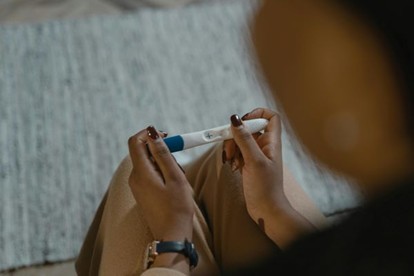
Is pregnancy a kind of caregiving? This might seem initially plausible since it is through pregnancy that essential fetal needs are met. Furthermore, at least in some societies, it is commonly thought that pregnancy is a labor of love or that continuing a pregnancy is a way of caring for another. Yet, it is a mistake to think of pregnancy in this way, that is, as a kind of caregiving. Understanding why is crucial for thinking well about the ethics and politics of abortion.

Let’s start with caregiving, which involves providing material or emotional care for another or oneself. Examples of the former include feeding, bathing, or dressing someone; examples of the latter include comforting or simply listening to another. Both types of caregiving are social practices and, as such, involve patterns of behavior that are part of a society or a group’s culture and that emerge or follow from a society or a group’s values and beliefs. Pregnancy, by contrast, is not a social practice. It’s a progressive biological condition characterized by numerous nonvoluntary changes in a female’s body. Some of these changes help maintain and support fetal development; others prepare the body for birthing and breastfeeding. While essential fetal needs (e.g., the fetus’s need for oxygen, nutrients, waste disposal) are met through pregnancy, these needs are not met through social practices.

This is not to deny that cultures have values and beliefs about pregnancy that result in social practices related to pregnancy or that pregnancy is implicated in our social lives. Regarding social practices, pregnant persons often engage in self-care for their pregnancy by, for example, consuming extra calories, or they engage in practices related to supporting fetal development by taking prenatal vitamins or avoiding certain foods. Many pregnant persons also develop a social relationship with their fetus during gestation and express a caring attitude towards their fetus. All these things influence how pregnant persons think about and respond to their pregnancy.

Yet, we should not conflate pregnancy with caregiving. Consider some important differences. Intentionally ceasing material caregiving does not involve some kind of physical intervention, such as surgery or medical care. And, for those who engage in material caregiving, when they are meeting their own needs – by eating, taking medication, etc. – they are not necessarily affecting others (at least, when they are not pregnant). These differences have to do with the fact that material caregiving lacks the distinctive kind of physical intertwinement and entanglement that characterizes pregnancy. Indeed, as the fetus comes into existence, it is necessarily integrated with the pregnant person. From the beginning of a pregnancy, when a fertilized egg implants in the uterine wall, the fetus’s internal entanglement is established. Continued development requires considerable integration with the pregnant person, in addition to the physical expansion of the pregnant person’s body.

Indeed, this kind of considerable physical intimacy is necessary for fetal development, and it is different from other types of intimacy in two important ways. First, this kind of invasive relation poses especially significant risks to a pregnant person’s health and wellbeing. A pregnant body undergoes physiological and anatomical changes – such as weight gain, fluid retention, ligament laxity, hormonal changes, and compression of soft tissues and nerves – which can be painful and debilitating. Additionally, a pregnancy person’s cardiac output increases, putting stress on the heart and putting them at persistent higher risks for cardiovascular disease and premature death for the rest of their lives. Second, physically invasive intimacy fundamentally concerns bodily integrity, and persons have a morally weighty interest in its protection. We are our bodies in an important sense, and pregnancy changes how a person’s body functions, how a person’s internal systems operate, and how a person is internally organized. Moreover, successfully carrying a fetus to term requires birthing, whether a birth is vaginal or cesarean. This is a physically traumatic end to a fetus’s invasive physical integration with a gestating person and, all by itself, raises concerns about forced pregnancy given the importance of bodily integrity.

Comparing pregnancy and material caregiving leads us to ignore the distinctive ways in which a person’s bodily integrity is at stake in pregnancy and not in caregiving. Of course, we certainly do not intend to minimize the demandingness of caregiving or its costs. We hold caregiving to be socially necessary, valuable work that can be demanding and costly and that we have a shared, moral obligation to provide. Yet, analogizing pregnancy to material caregiving suggests that pregnant persons have far more agency over what occurs in the progressive condition of pregnancy than they do. Further, considering pregnancy as a form of caregiving suggests that pregnant persons may have a moral obligation to gestate. This perpetuates the pernicious view that those who can gestate must use their bodies in the sexual and reproductive service of others. This threatens to naturalize sex-based caregiving.

In today’s political climate, thinking of pregnancy as a kind of caregiving is especially dangerous. The U.S. Supreme Court overruled Roe v. Wade in Dobbs vs. Jackson Women’s Health Organization (2022) and held that the U.S. Constitution does not confer a right to abortion. At this time, 12 U.S. states have almost completely banned the practice, and Florida, Iowa, Georgia, and South Carolina have banned abortion at about 6 weeks. Other states have taken measures to protect the practice and make it more accessible. In states with restrictive abortion bans, pregnant persons are legally required to gestate and, then, legally required to birth. This forces pregnant persons – overwhelmingly women – to be in the forced service of the state. Given the importance of caregiving duties, the suggestion that pregnancy is a form of caregiving provides support for such sexual servitude.  

Non-monogamy and the “Black Marriage Problem”

In this discussion post, Justin Clardy (he/they; Santa Clara University) introduces their article recently published in the Journal of Applied Philosophy on polyamory and a defense for minimal marriage among the Black population in the USA.

The short synopsis of the article is accompanied by an asynchronous conversation among Anika Simpson (Howard) Faith Charmagne, Luke Brunning (Leeds) and Nannearl Brown (PAGES TRG) where they will engage with the article in terms of its academic and practical implications for the Black population in the US.

Created with Bing AI Image Generator (2024).

Synopsis by Justin Clardy

The Black marriage problem—or the fact that “Black folks just aren’t getting or staying married like they used to”—has been a concern for Black writers. This problem is concerning because just less than 60 years ago, Black marriages rates were thought to be one of the zeniths of the Civil Rights Movement.

In 2022, Ralph Richard Banks appeared in the New York Post doubling down on his 2011 suggestion that in order to solve the Black marriage problem, Black women should consider marrying more white men. What’s striking about Banks’ suggestion is not just that it does not take endogamy as seriously as it should, it also does not take non-monogamy among Black folks as seriously as it should either. What possibilities would expanding legal marriage to include plural marriages offer for the same populations of unmarried Black folks that Black writers believe to be driving the Black marriage crisis? This is one of the questions that I explore in a recent article called “Polyamory in Black.”

Historical records in the U.S. tell stories of non-monogamous relationships dating back to the antebellum period. Some of these relationships were, of course, forged by the pernicious design of the domestic slave trade. Other Black non-monogamous intimate relationships, however, were chosen. In her book, Black Women Black Love: America’s War on African American Marriage, Dianne Stewart writes about Dorcas Cooper who was content to remain in a polygamous marriage after arriving on a plantation to find her husband married to a second woman. When Cooper recognized how well her husband’s second wife, Jenny, took care of Cooper’s kids, historical record even shows a deep fondness of Jenny from Cooper as she would not “let anybody say anything against [Jenny].” Historical record also during Reconstruction, shows Freedmen’s Bureau agents disregarding non-monogamous intimacies in the years following the Civil War by breaking up Black non-monogamous families as one agent recounted “Whenever a negro appears before me with 2 or 3 wives…I marry him to the woman who has the greatest number of helpless children who would otherwise become a charge on the bureau.” Importantly, then just as now, marriage was tethered to a bundle of rights and entitlements that had material consequences, such as the denial of Civil War pensions, on Black individuals and families who the institution forbade.

Despite (or, perhaps because of) the presence of Black non-monogamies, both in the antebellum and Reconstruction periods, anti-non-monogamous propaganda routinely portrayed non-monogamists as Black or barbaric in order to convey messages of chaos, foreigners, and despotism. As I show in an article published in the Journal of Applied Philosophy, some of these anti-black anti-non-monogamous impressions were published in media outlets following the Reynolds v United States decision handed down by the Supreme Court. Even the Court’s official opinion white engagement with non-monogamy was said to produce a “peculiar race” as the practice was thought natural and common among Asiatic and African peoples but foreign to whites.

Insofar as the Reynolds opinion remains one of the highest opinions handed down by the U.S. Supreme Court on plural marriage, present day marriage law has disproportionately harmful consequences on the growing population of Black polyamorists in the U.S.—both socially and materially. For example, non-monogamists are more likely than their monogamist counterparts to have their relationship(s) subjected to social scrutiny and are less likely than their monogamous counterparts to have their relationships cohere with zoning laws forbidding the number of “unrelated” people living in the same household. The ongoing ban against plural marriages in the U.S. generate interesting questions about what it might take to end non-monogamous oppression and enact measures to repair the harms done by legal marriage on Black non-monogamists. And, as I argue in “Polyamory in Black” I think that a compelling rationale can be offered for thinking about Black reparations along these lines.

(more…)

The Disruption of Human Reproduction

This is already my third post about ectogestative technology, better known as “artificial womb technology”. While in the first post, I explored the idea that this technology could potentially advance gender justice, in the second, I approached the technology from the perspective of post-phenomenology. In this third post, I look at the technology as an example of a socially disruptive technology. Ongoing research in the philosophy of technology investigates the ways in which 21st Century technologies such as artificial intelligence, synthetic biology, gene-editing technologies, and climate-engineering technologies affect “deeply held beliefs, values, social norms, and basic human capacities”, “basic human practices, fundamental concepts, [and] ontological distinctions”. Those technologies deeply affects us as human beings, our relationship to other parts of nature such as non-human animals and plants, and the societies we live in. In this post, I sketch the potential disruptive effects of ectogestative technology on practices, norms, and concepts related to expecting and having children.

(more…)

Countering Social Oppression

In this post, Suzy Killmister (Monash) discusses her recently published article in the Journal of Applied Philosophy giving an answer to the question, what, if anything, can members of oppressed groups do to counter that oppression?

© Adam Fagen (CC BY-NC-SA 2.0)

During the Memphis Sanitation Strike of 1968, protestors marched through the streets carrying signs bearing the slogan ‘I Am a Man’. Today, protesters march through the streets carrying signs declaring ‘Trans Rights are Human Rights’, while others proclaim ‘No Human is Illegal’. What’s going on here? And more importantly, what explains the rhetorical power of such statements?

(more…)

Feminism without “woman”?

Anyone who is at all online these days – as you are if you’re reading this – will know that one of the most fierce culture wars revolve around the meaning of “woman”. They’re fought in courts, in universities, on other blogs and of course on social media and even on streets.

(more…)

The care perspective and the police: reform, defund or abolition?

In recent months, the police have been the object of extensive discussion and harsh criticism in the UK. The Louise Casey report published in March found the Metropolitan Police (the police service for the Greater London area) to be institutionally racist, misogynistic and homophobic. Since then, various incidents in different parts of the country – most recently in Cardiff last week, resulting in the tragic deaths of teenagers Kyrees Sullivan and Harvey Evans – have seen the police behaving in deeply problematic ways. The police have also come under attack for its behaviour towards protesters, or people believed to be such, especially during the weekend of the Coronation following the passing of the Public Order Bill. This is in the context of a crisis of legitimacy that the institution has been facing for a few years now, in part as a result of a number of other high-profile cases and investigations. The police are increasingly seen not as an institution that function to protect all citizens, but as a potential threat to members of different social groups. Scepticism about whether the police can be trusted to act lawfully and to provide truthful accounts of its activities is mounting. Mistrust towards the police is of course not in itself a new phenomenon, especially among certain sectors of society, but it has been gaining more traction in broader segments of the population.

(more…)

Selling Silence: The Morality of Sexual Harassment NDAs

In this post, Scott Altman (USC Gould) discusses his recent JOAP 2022 Annual Essay Prize winning article about the morality of sexual harassment nondisclosure agreements.

Harvey Weinstein, Chairman, The Weinstein Company
Harvey Weinstein by Thomas Hawk (CC BY-NC 2.0)

Nondisclosure agreements (NDAs) pay sexual harassment and abuse victims not to tell their stories or name their abusers. Harvey Weinstein’s many NDAs, and the #MeToo movement, spurred some states to make such NDAs legally unenforceable. 

My Selling Silence article argued in favor of these laws. Sexual wrongdoer NDAs protect abusers, endanger future victims, and undermine deterrence. The article rejected three justifications for wrongdoer NDAs, two of which I will mention briefly before explaining the third.

(more…)