We Should Talk About Caste (alongside Gender and Race)
In this post, Ajinkya Deshmukh from The University of Manchester discusses his article recently published in the Journal of Applied Philosophy on why thinking about caste can help us better understand social identities like gender and race that impact our lives.

Features of our identity that we have little to no control over can influence how we think, what we do, and who we become. The lottery of birth – what the famous investor Warren Buffet called the ovarian lottery – heavily determines things like nationality, gender, and race. Your passport influences how easily you can pursue international opportunities. Your gender can govern where and when you can be out in parts of the world. Your race can affect if you get that job. No wonder then that philosophers have thought about social categories like gender and race. Caste – which is also determined at birth and also impacts life trajectory – has not gotten similar attention.
“So what?” you might ask. Surely it is a niche phenomenon not affecting most of the world. But the numbers are staggering. Caste-based discrimination affects hundreds of millions of people globally, and manifests as segregation in schools, housing, and public life; reduced access to political and civil rights; and inadequate representation in educational curricula and the media. Caste is found in Asia, Europe and the Americas, and among Hindus, Muslims, Sikhs, Buddhists, and Christians. Anti-discrimination policies at Universities, in cities, and even countries are being revised in light of caste.
What is caste anyway? It is a centuries-old hierarchical grouping of individuals in society wherein caste membership comes with corresponding expected behavioural, social, or cultural practices. Failure to adhere to these expectations can result in varying degrees of social sanctions, including (in serious cases) “honour” killings and mob lynching. Castes are divided into so-called “upper” and “lower” stratas. Many practitioners follow the outlawed practice of “untouchability”, physically and socially distancing themselves from so-called “lower” caste members. The most persistent feature of the caste system is endogamy, where members of a caste will only marry within their caste or their caste strata. In India, for instance, most people have friends from within their caste/strata and most will go on to marry within their caste.
Three things stand out as strange about caste, especially to those who did not grow up in societies where it operates.
1. It is inherited from one’s parents but there are no genes that determine any visible features by which one could tell somebody’s caste. Indeed, there are not even invisible traits expressed by one’s genes that correspond to one’s caste identity.
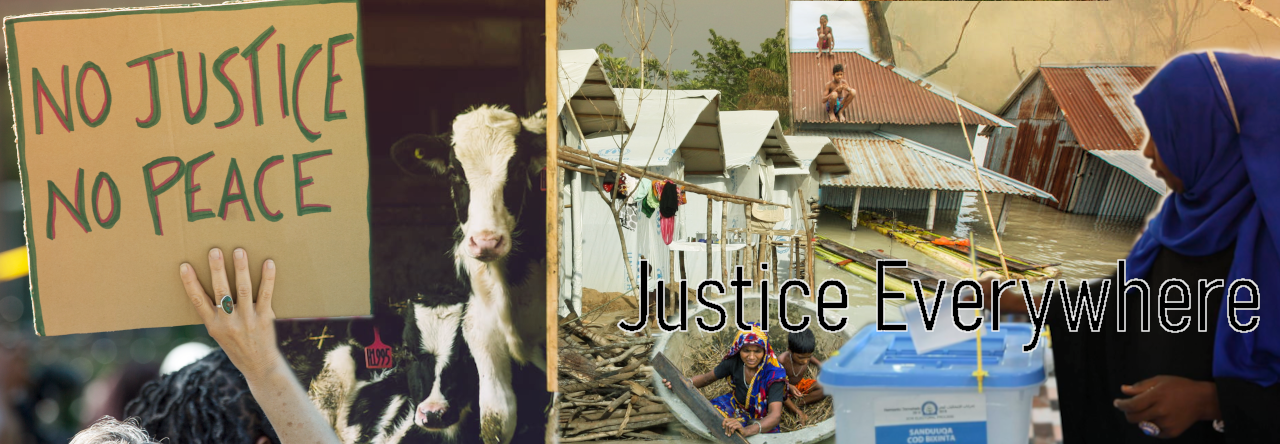
2. Despite being the foundation of a lot of discrimination, it is invisible. You cannot tell somebody’s caste just by looking at them. Go on, try it. You don’t need to know the names of castes. Just look at the picture at the head of this post and see if you can hierarchically group the individuals based on anything other than a hunch. You have to ask or infer one’s caste from other information. And yet, people cannot easily ‘pass’ as belonging to a caste other than their own because caste bona fides are often verified communally and institutionally.
3. For an invisible, non-genetic property, it is nevertheless ‘sticky’ like gender and race. Just as one cannot easily change one’s gender or race, caste also sticks to the person. This table from my paper summarises these peculiar features of caste.
| # | Features↓ / Social Kinds → | Gender | Race | Caste |
| 1 | Basis for discrimination / affirmative action | Yes | Yes | Yes |
| 2 | Typically ascribed at birth | Yes | Yes | Yes |
| 3 | Hard(er) to change or disavow | Yes | Yes | Yes |
| 4 | Genetic basis to ascription | Yes | Yes | No |
| 5 | Visibility claim / Marked body | Yes | Yes | No |
Table 1: Similarities and dissimilarities between various social kinds.
Yet most theoretical accounts of social kinds focus on gender and race, then generalise from there. This often leads to explanatorily inadequate theories. I argue that using caste as a test case for understanding systems of social identity will benefit both the scholarship on caste and our broader understanding of the social world.
Broadly speaking, I argue that theories of social identity that try to give fixed, unchanging definitions – often called ‘essentialist’ accounts – fail to capture the changing fortunes and social dynamics of these identities. Further, while such accounts might do a good job of capturing a snapshot of present-day conditions, they risk fueling views that see certain social identities as perpetually dominant or subordinate. A good theory, I claim, must not only aid in emancipatory efforts against social-kinds-based discrimination, but also be able to explain how an erstwhile oppressed group can redefine itself on its own terms.
If you want a very quick primer on caste, I encourage you to read section 2 of my paper. If you want to learn how caste is like and unlike gender and race, sections 4 and 5 do exactly that. If those sections pique your interest, read the rest of the paper!
Ajinkya Deshmukh is a post-doctoral researcher in philosophy at The University of Manchester. His research interests are social ontology and epistemology, the philosophy of attention, and Buddhist philosophy.