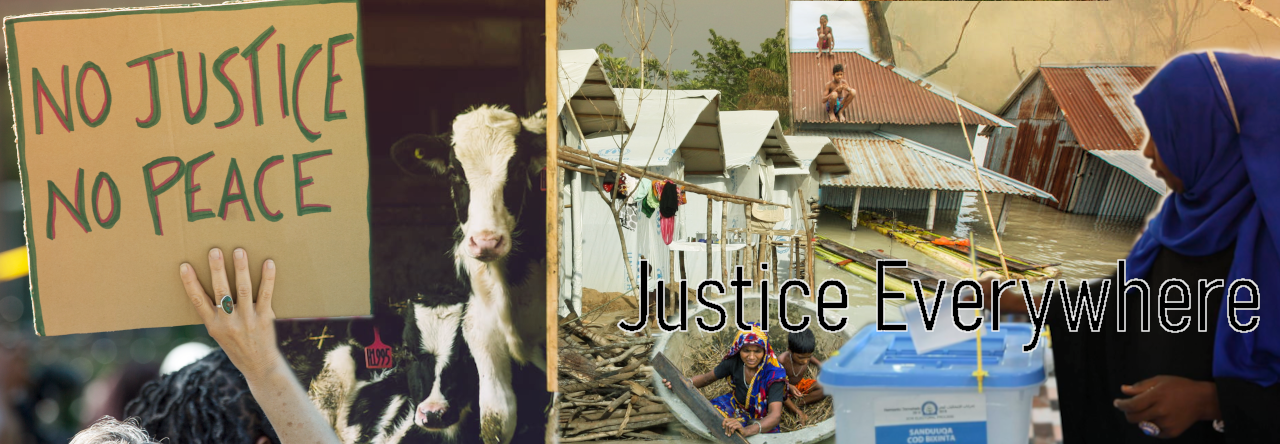
From the Vault: Humans, Animals and the Environment
While Justice Everywhere takes a short break over the summer, we recall some of the highlights from our 2025-26 season.
With record breaking heatwaves, climate change has been at the forefront of many political debates this year. However, the climate and the impact that climate change has on communities accross the world is but one of the issues relating to the natural environment our writers have dug into. Here are a few highlights from this year’s posts relating to human communities, animal communities, and the environment:
- Does climate change mean that we all, morally, ought to have fewer children? In our ongoing collaboration with the Journal of Applied Philosophy, Serena Olsaretti and Isa Trifan explore this challenging question.
- Campaigns for animal rights often rely upon shocking images of their suffering to gain attention and drive change. Whilst this often succeeds, it can also be counter-productive and drive people away. In this fascinating post, Steve Cooke discusses his paper in the Journal of Applied Philosophy and asks – what would it mean to use wonder to achieve animal rights?
- Can we make animals work for us? Some people argue that employing (some) animals can be compatible with their interests. However, Angie Pepper argues that this is mistaken.
- How should we conceive of the status of nonhuman animals? Pablo Magaña and Devon Cass argue that there are resources within the literature on relational equality that mean we can extend it to include animals.
- In human relationships, we often operate with the ‘benefit of the doubt’. When a friend cancels a plan or a family member behaves differently to normal, we might assume there is something going on that has little to do with us. In this thought-provoking post, Matthew Perry considers whether we should approach the question of animal minds with a similar “benefit of the doubt” attitude.
- As a result of climate change we can expect there to be many more environmental crises and disasters, such as large scale fires and flooding. This makes Fay Niker and Matthew Adams’ June post so much more important. Reflecting on the phenomenon of powerful people taking advantage of crises, they ask – if political actors across the ideological spectrum try to take advantage of crises, what makes such opportunism problematic?
Stay tuned for even more on this topic in our 2026-27 season!
***
Justice Everywhere will return in full swing soon with fresh weekly posts by our cooperative of regular authors, in addition to our Journal of Applied Philosophy series and other special series. If you would like to contribute a guest post on a topical justice-based issue (broadly construed), please feel free to get in touch with us at justice.everywhere.blog@gmail.com.
