Tagged: animals

Missing the Animal for the Forest? The Limits of the ‘Rights of Nature’ Approach

This is a guest post by Pablo Serra Palao.

A photograph showing a large body of water surrounded by forested hills.
San Marcos Lagoon, Ecuador / Photo by Marcelo Trujillo from Pixabay

Philosophers are well aware of the tension between protecting ecosystems as a whole and defending the rights of individual sentient animals. Social movements and the general public are aware of it too, especially when a case of culling animals classified as ‘invasive species‘ gets coverage in mainstream media. Both ethical positions seem to have grown apart for some time, but could the increasing legal recognition of nature as a rights holder actually improve the legal treatment of individual animals?

The answer, as it turns out, is far messier than a simple yes or no. I argue that existing legal cases where rights of nature are recognised tend to perpetuate the tension between ecosystem-level protection and the rights of individual animals. But this need not be so.

The Estrellita case: setting the scene

Over the past two decades, legal systems around the world have begun to recognise nature in general, or specific ecosystems, as a rights holder. In so doing, they are pushing law beyond anthropocentrism and Western legal thought, at least on paper (see the UN Harmony with Nature Initiative for an overview of rights of nature cases globally).

However, the results are not what animal rights advocates would expect, and they can give rise to perplexing questions: Can a court recognise the rights to life and physical integrity of individual sentient animals and, at the same time, a human right to eat meat? Well, apparently, it can, and both were recognised under the umbrella of the rights of nature.

In 2022, the Constitutional Court of Ecuador ruled on a case originating from a habeas corpus action (a legal mechanism against unlawful detentions traditionally reserved for human individuals) filed in 2019 to defend a woolly monkey named Estrellita. Known as the Estrellita case, the Court saw an opportunity to clarify the content and scope of the rights of nature enshrined in the 2008 Ecuadorian Constitution (Art. 10 and 71 to 74), determining whether this framework also included individual animals as rights holders or, at least, individual wild animals.
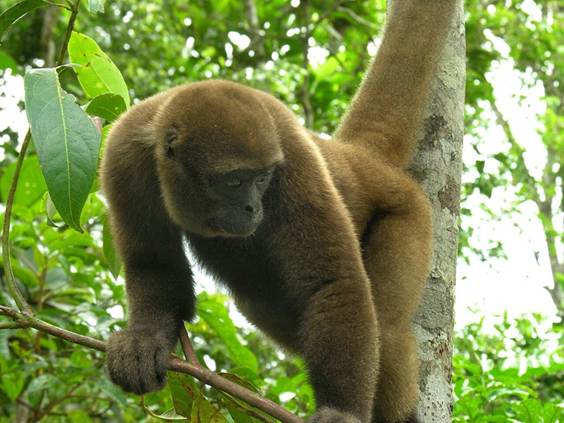
A woolly monkey climbing a tree.
Woolly Monkey / Photo by Evgenia Kononova from Wikimedia

Where the tension lies

The Court tried to have it both ways, embracing holistic and individualistic approaches —that is, ecosystem-centred versus individual-centred. The Court stated that nature acquires the status of subject of rights from a system-based approach, encompassing all the biotic and abiotic elements that shape this ‘complex subject’. Yet the Court also held that sentient animals are rights holders and must be considered individually, not merely as components of ecosystems. It recognised the rights to life and physical integrity for all sentient animals and certain specific rights of wild animals, such as the right not to be hunted, fished, captured, trafficked, etc., and the right to free animal behaviour.

These are significant legal claims that, taken seriously, would change current human practices drastically. Yet the Court also introduced interpretive principles that pull in the opposite direction. According to the ecological interpretation principle, animal rights must be understood through the lens of biological interactions that maintain ecosystem balance. Under this logic, the Court stated that environmental authorities may eliminate ‘invasive species’, doing little to smooth out the alleged incompatibility between protecting the environment and respecting animal rights.

This principle also allows the Court to acknowledge that human food practices and domestication are part of these legitimate ‘biological interactions’ and, therefore, must be respected. However, this hardly describes today’s intensive livestock farming, embedded in capitalist dynamics of exploitation. The kind of domestication characteristic of this system does not seem to be a desirable biological interaction fundamental to ecosystem balance.

There is no human right to eat tofu, but neither to eat animals

The most striking piece of reasoning, though, is that the Court also recognises a human right to eat animals based on two reasons: a) humans are natural omnivores; and b) food is a biological condition of human beings and a legally protected human right. This reasoning is questionable.

First, the Court flirts with the naturalistic fallacy: the fact that humans are omnivores only means that we can feed on a wide variety of organisms, but it says nothing about what we ought to eat. And it says nothing about killing animals for food (especially if there are also strong moral reasons against doing it).

What we do have is a human right to food, which brings me to the second point. If we follow a needs-based approach to the philosophical foundation of rights (as the Court seems to do), the human right to food is grounded in the basic need for food and nutrition. But eating animals is just one existing means, among many others, to satisfy that basic need. It is important to distinguish between the basic need itself and the diverse means to satisfy it. Only the former grounds the existence of a right. Therefore, there is no such thing as a human right to eat animals any more than there is a right to eat tofu.

Better friends than foes, right?

The Estrellita case is just an example among many others. However, the lesson is not that the rights of nature and animal rights are inherently incompatible. Both serve the project of expanding legal consideration beyond the human.

But the case reveals that simply folding animal rights into the rights of nature does not resolve the deep disagreements between holistic and individualistic ethical positions. It may, instead, reproduce those disagreements inside the law, quietly overriding the possibility of improving the legal treatment of animals individually considered. If we want to take both frameworks seriously, we also need to confront hard legal-philosophical questions. If rights are legal artifacts that serve to protect individuals so they can live together in society, is our current understanding of legal rights well suited for such a complex subject, i.e., ‘nature’? Legal rights, as artifacts, can change and adapt, but they are also embedded in a long history that has shaped its concept, content, and scope. Beyond the recognition of rights itself, interpretation and legal reasoning play a prominent role. The coherence of our legal systems depends on getting these and other questions right.


Pablo Serra-Palao is a PhD Candidate and Predoctoral Fellow in legal philosophy at Comillas Pontifical University (Madrid, Spain), and has written on topics including ecological justice, green criminology, and animal rights theory.

This post is based on the author’s open-access article ‘Naturaleza, animales, derechos: encuentros y desencuentros en la Corte Constitucional del Ecuador’

When Curiosity Wrongs the Cat

Sneaky Cat
Creative Commons Qatar from Qatar, CC BY 2.0, via Wikimedia Commons

People are increasingly concerned with what we owe to other animals as a matter of justice. Philosophical writing on these issues typically takes two forms. First, there is conceptual work: thinking about how existing ideas such as liberty, citizenship, democracy, and legitimacy, might apply or be extended to include other animals. Second, there is normative work: thinking about how we should treat other animals. Both projects require that we know other animals; know something of their capacities, their experiences, their relationships, and the material conditions of their lives. Thinking about justice for animals, then, necessarily involves learning more about who they actually are.

(more…)

Relational equality and the status of animals

a photograph showing three calves, a dog and a monkey resting in the shade in an Indian street
Dogs, calves and a monkey photographed in a city in India. Image by Simon from Pixabay

This is a guest post by Pablo Magaña and Devon Cass

Three challenges

Relational egalitarians believe we should eradicate certain inequalities of rank and status, such those based on gender, race, or caste. Almost without exception, these concerns are focused on humans (typically adult and able-minded). But it is worth noticing that nonhuman animals have also held, across time and space, drastically different statuses. Some have been treated as divinities to be revered, many more as plagues to be eradicated, and even a few as war enemies—as in Australia’s failed campaign against Emus. One might wonder then: can we apply the ideal of relational equality—or, more generally, a relational approach to justice—to our relationships with the other animals? This is a question few have addressed. (Two commendable exceptions are Andreas Bengtson’s “Animals and relational egalitarianism(s)”, and, with Kasper Lippert-Rasmussen, “Relational egalitarianism and moral unequals”)

Well, that’s unsurprising, or so one may think. For the extension of relational egalitarianism to animals seems to stumble, at first glance, upon three significant obstacles. First, relational equality requires that we treat one another as equals, a kind of reciprocity to which animals cannot correspond (the absence of social relations problem). Second, even if humans and animals are socially unequal, it’s not clear why this would be objectionable. After all, animals do not seem to possess a sense of self-worth that could be damaged when treated as inferiors (the absence of understanding problem). Third, relational equality seems dependent or grounded on moral equality. But, many argue, humans and animals are not moral equals (the absence of moral equality problem).

In a recent paper in Philosophical Studies, we argue that this pessimism is premature. To answer the above problems, one may call into question their empirical assumptions. Perhaps, one could suggest, maybe some animals do possess a sense of self-worth that can be damaged when treated as inferiors. In our article, we pursue a different strategy: whatever the truth of the empirical assumptions, the three problems rest on a controversial (and, we suggest, mistaken) understanding of the demands of relational equality—or, more generally, relational justice.

(more…)

From the Vault: Animals, the Environment, and Nature

While Justice Everywhere takes a short break over the summer, we recall some of the highlights from our 2024-25 season. 

Here are a few highlights from this year’s writing on a wide range of issues relating to nature, animals and environmental politics:

Stay tuned for even more on this topic in our 2025-26 season!

***

Justice Everywhere will return in full swing in September with fresh weekly posts by our cooperative of regular authors (published on Mondays), in addition to our Journal of Applied Philosophy series and other special series (published on Thursdays). If you would like to contribute a guest post on a topical justice-based issue (broadly construed), please feel free to get in touch with us at justice.everywhere.blog@gmail.com.

More Than a Name: Decolonising Wildlife

Vancouver’s official city bird is the small but charming Anna’s Hummingbird. This bird’s namesake was a 19th Century Italian Duchess – Anna Masséna. These hummingbirds are not found in Europe, so the chances are Anna never even saw one in flight. And yet, the whole species unknowingly trills through the sky carrying her banner.

The colonial practice of giving birds eponyms (names after a particular person) was frequently used to uphold a person’s legacy, curry favour, or directly honour them. In North America alone, there are over 150 bird species with eponyms.[1] They include the Stellar’s Jay, the Scott’s Oriole and the Townsend’s Warbler. And this practice is not reserved just for our feathered friends. Many mammals, reptiles and fish are named eponymously, too. The mammals include the Abert’s Squirrel, the Heaviside’s Dolphin, and the Schmidt’s Monkey.[2]

This post provides a short case in support of renaming animals currently named eponymously. It defends two ideas that should inform the renaming process. First, renaming prevents the improper glorification of racist or colonial figures and so it is morally required to create a social environment necessary for human equality. Second, renaming as a process productively reorients us to each animals’ importance – independent of human history.

(more…)

From the Vault: The Journal of Applied Philosophy

While Justice Everywhere takes a short break over the summer, we recall some of the highlights from our 2023-24 season. 

The cover page of a recent edition of Journal of Applied Philosophy. (c) Wiley 2024

Here are a few highlights from this year’s posts published in collaboration with the Journal of Applied Philosophy:

Stay tuned for even more on this topic in our 2024-25 season!

***

Justice Everywhere will return in full swing in September with fresh weekly posts by our cooperative of regular authors (published on Mondays), in addition to our Journal of Applied Philosophy series and other special series (published on Thursdays). If you would like to contribute a guest post on a topical justice-based issue (broadly construed), please feel free to get in touch with us at justice.everywhere.blog@gmail.com.

The Ethics of Keeping Pets: Why Love is Not Enough

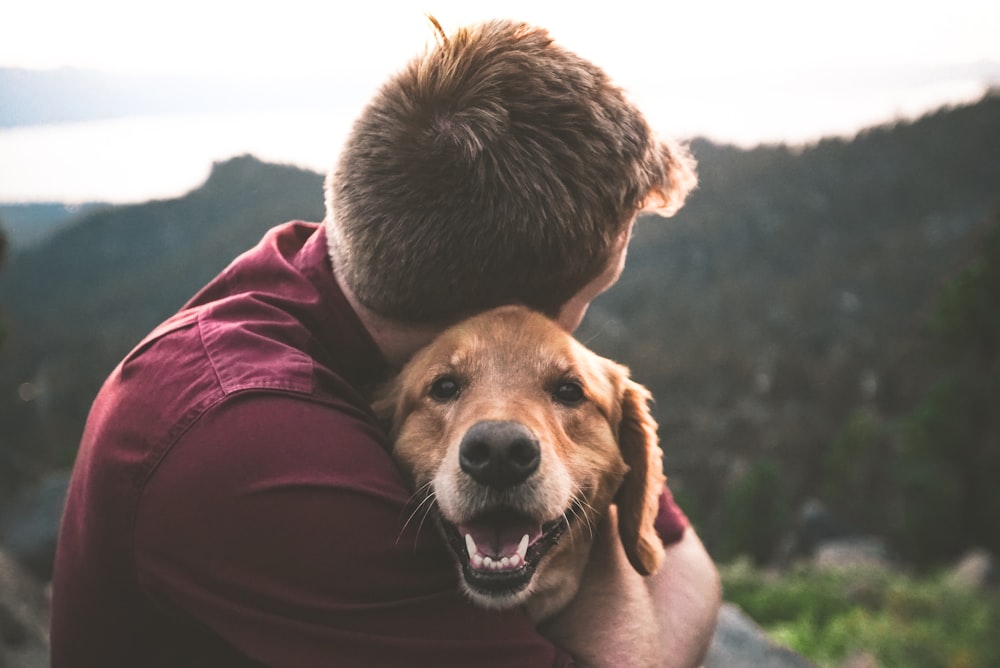
photo of man hugging tan dogPhoto by Eric Ward on Unsplash

I have been thinking about the ethics of keeping sentient animals as pets. As someone who has lived with dogs, cats, rats, mice, gerbils, rabbits, lizards, guinea pigs, and chickens, I have experienced first-hand the joy and companionship that such creatures can bring to our lives and the love that we can have for them. Yet, as a philosopher interested in animal ethics, I am aware of the many moral problems associated with our practice of keeping animals as pets. These problems have led me to reconsider human-animal companionship, and I have come to think that no matter how much we might love the animals we bring into our homes, we cannot justify doing so. (more…)

Why it’s Wrong to Spy on Animals

Humans like watching nonhuman animals. We watch them in parks, in zoos, on farms, in sanctuaries, in pet shops, in our gardens, on the streets, in our homes, on tv, and so on. Lately, we have developed increasingly innovative and ingenious ways of watching animals: ways of accessing their intimate lives without them knowing. Take, as an example, the BBC documentary “Spy in the Wild” in which “animatronic spy creatures infiltrate the animal world to explore their complex emotions”. (If you haven’t seen it, here’s a clip.) Or consider the proliferation of wildlife cams, zoo cams, and pet cams that are placed discretely in animals’ homes and give us unlimited access to their daily lives. Last year, a wildlife fan installed a camera within a birdbox to watch a family of blue tits and the footage was viewed 41 million times within a month of being uploaded. In 2017, 1.2 million people tuned in to watch April the giraffe give birth at Animal Adventure Park. (more…)

What Do We Owe to Pandemic Puppies?

For many, having an animal companion during the pandemic has been a blessing. Someone to keep you company, someone to play with, someone who brings you joy and gives you a reason to get out of bed. Indeed, in the UK, the Pet Food Manufacturers’ Association (PFMA) reported that 3.2 million households in the UK have acquired an animal companion since the start of the pandemic. This brings the total number of animal companions in the UK up to 34 million, including 12 million cats and 12 million dogs, and equates to 17 million households being responsible for an animal’s welfare. (more…)