When Animals Enter the Demos: Two Problems for Political Inclusion
In this post, David Paaske and Angela Martin discuss their article recently published in the Journal of Applied Philosophy on two problems of democratic inclusion of animals.

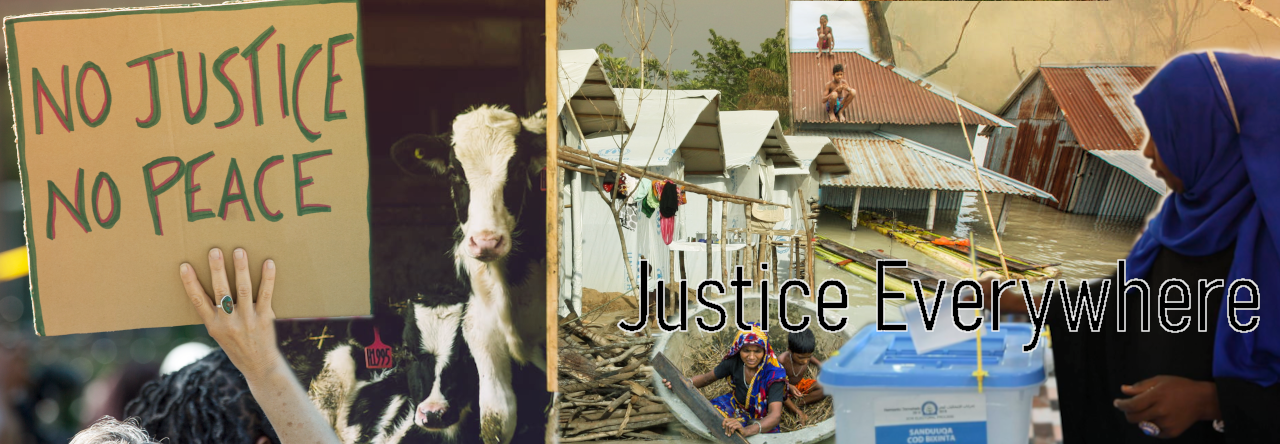
For a long time, debates in animal ethics focused primarily on how humans ought to treat animals. The central questions concerned cruelty, suffering, and welfare: Which practices are permissible? How much harm is too much? More recently, however, philosophers have argued that this focus is too narrow. Animals are not merely passive recipients of human action. They are deeply and systematically affected by political decisions—about land use, agriculture, energy, urban planning, conservation, and climate policy. If justice is concerned with how power is exercised over those whose lives it shapes, then animals seem to fall squarely within its scope.
This thought has motivated what is often called the ‘political turn’ in animal ethics. Rather than asking only how individuals should treat animals, political theorists ask how institutions should be structured to account for animals’ interests. Influential proposals describe animals as citizens, denizens, or members of sovereign communities, and argue that their interests ought to be represented—directly or indirectly—within democratic decision-making. The underlying intuition is simple and compelling: if animals are sentient beings with morally significant interests, and if political decisions profoundly affect those interests, then excluding animals from politics looks like a form of injustice.
In our recent paper, we take this intuition seriously. But we also argue that once animals are genuinely included as political subjects, two fundamental problems arise—problems that have not received sufficient attention in the literature.
Two problems for political inclusion
The first is what we call the Conflict Problem. Political inclusion does not merely require that interests be recognised; it requires that they be adjudicated. Yet the interests of animals often conflict sharply—not only with human interests, but with one another. Predators survive by killing prey. Conservation policies benefit some species at the expense of others. Infrastructure projects may harm local animals while benefiting far larger populations elsewhere.
Consider the case of wind turbines. Large-scale wind energy projects are widely defended on environmental grounds. They reduce greenhouse gas emissions and contribute to mitigating climate change, which in turn benefits humans and animals alike. At the same time, turbines cause significant and foreseeable harm to present animals through habitat destruction, collisions, and noise. If animals are politically included, whose interests should prevail—the many animals harmed now, or the many more who may benefit later? And how should conflicts between animals themselves be resolved?
These are not exceptional cases. Once animals are included in the demos, such conflicts become pervasive. Yet familiar democratic tools—compromise, aggregation, cost–benefit analysis—sit uneasily with stakes involving survival, bodily integrity, and irreversible harm. The Conflict Problem highlights a structural tension between political inclusion and the tragic nature of many interspecies conflicts.
The second challenge is the Numbers Problem. Nonhuman animals vastly outnumber humans. Even conservative estimates suggest that wild animals alone number in the trillions. If political inclusion tracked affectedness, population size, or proportional representation, animals would dominate political decision-making. Human political influence would be radically reduced, and many ordinary human projects—housing developments, transport infrastructure, even public health measures—could be routinely overridden on animal-protective grounds.
Many people find this implication implausible or unacceptable. Yet rejecting it is not straightforward. If animals count morally, why should they not count politically in proportion to their numbers or the extent to which they are affected? The Numbers Problem forces proponents of political inclusion to explain why animals should be included—but not too much.
Why proposed solutions fall short
A range of responses has been proposed to defuse these problems. Some restrict political inclusion to certain categories of animals—such as domesticated animals—while treating wild animals as members of separate sovereign communities. While these strategies may soften the Conflict and Numbers Problems, we argue that they do not resolve them without significant cost. Weighting interests by cognitive capacity risks reintroducing hierarchies that sit uneasily with commitments to equal moral consideration. Restricting inclusion excludes many animals whose interests are undeniably shaped by political decisions. Institutional workarounds can dilute animals’ political power to the point where inclusion becomes largely symbolic.
Alternatively, one might accept the radical implications of political inclusion: that justice really does demand sweeping changes to human institutions, priorities, and resource allocation. This response is coherent—but it requires acknowledging just how disruptive animal-inclusive democracy would be. The political turn, on this reading, is not a modest extension of existing democratic ideals. It is a demand for profound political transformation.
Taking inclusion seriously
Our aim is not to reject the political turn in animal ethics. On the contrary, we believe it has brought essential questions into view. But taking animals seriously as political subjects means taking these problems seriously as well. Political inclusion is not a cost-free moral upgrade. It forces us to confront conflicts that cannot be neatly resolved and numbers that cannot be easily managed.
Justice has a habit of unsettling our institutions. If animals are to be included in the demos, we must decide how much disruption we are willing to accept—and which democratic principles we are prepared to revise in response. The answers to these questions remain open. What is no longer plausible, we suggest, is to assume that political inclusion can be achieved without confronting its most demanding implications.
David Paaske is a PhD student at the Arctic University of Norway. Angela Martin is a lecturer at the University of Fribourg.

