Missing the Animal for the Forest? The Limits of the ‘Rights of Nature’ Approach
This is a guest post by Pablo Serra Palao.

Philosophers are well aware of the tension between protecting ecosystems as a whole and defending the rights of individual sentient animals. Social movements and the general public are aware of it too, especially when a case of culling animals classified as ‘invasive species‘ gets coverage in mainstream media. Both ethical positions seem to have grown apart for some time, but could the increasing legal recognition of nature as a rights holder actually improve the legal treatment of individual animals?
The answer, as it turns out, is far messier than a simple yes or no. I argue that existing legal cases where rights of nature are recognised tend to perpetuate the tension between ecosystem-level protection and the rights of individual animals. But this need not be so.
The Estrellita case: setting the scene
Over the past two decades, legal systems around the world have begun to recognise nature in general, or specific ecosystems, as a rights holder. In so doing, they are pushing law beyond anthropocentrism and Western legal thought, at least on paper (see the UN Harmony with Nature Initiative for an overview of rights of nature cases globally).
However, the results are not what animal rights advocates would expect, and they can give rise to perplexing questions: Can a court recognise the rights to life and physical integrity of individual sentient animals and, at the same time, a human right to eat meat? Well, apparently, it can, and both were recognised under the umbrella of the rights of nature.
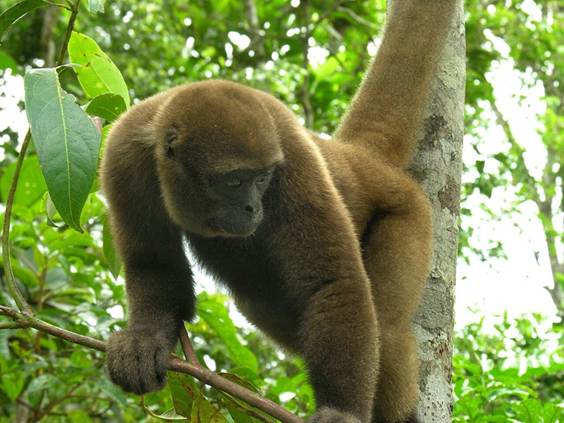
In 2022, the Constitutional Court of Ecuador ruled on a case originating from a habeas corpus action (a legal mechanism against unlawful detentions traditionally reserved for human individuals) filed in 2019 to defend a woolly monkey named Estrellita. Known as the Estrellita case, the Court saw an opportunity to clarify the content and scope of the rights of nature enshrined in the 2008 Ecuadorian Constitution (Art. 10 and 71 to 74), determining whether this framework also included individual animals as rights holders or, at least, individual wild animals.
Where the tension lies
The Court tried to have it both ways, embracing holistic and individualistic approaches —that is, ecosystem-centred versus individual-centred. The Court stated that nature acquires the status of subject of rights from a system-based approach, encompassing all the biotic and abiotic elements that shape this ‘complex subject’. Yet the Court also held that sentient animals are rights holders and must be considered individually, not merely as components of ecosystems. It recognised the rights to life and physical integrity for all sentient animals and certain specific rights of wild animals, such as the right not to be hunted, fished, captured, trafficked, etc., and the right to free animal behaviour.
These are significant legal claims that, taken seriously, would change current human practices drastically. Yet the Court also introduced interpretive principles that pull in the opposite direction. According to the ecological interpretation principle, animal rights must be understood through the lens of biological interactions that maintain ecosystem balance. Under this logic, the Court stated that environmental authorities may eliminate ‘invasive species’, doing little to smooth out the alleged incompatibility between protecting the environment and respecting animal rights.
This principle also allows the Court to acknowledge that human food practices and domestication are part of these legitimate ‘biological interactions’ and, therefore, must be respected. However, this hardly describes today’s intensive livestock farming, embedded in capitalist dynamics of exploitation. The kind of domestication characteristic of this system does not seem to be a desirable biological interaction fundamental to ecosystem balance.
There is no human right to eat tofu, but neither to eat animals
The most striking piece of reasoning, though, is that the Court also recognises a human right to eat animals based on two reasons: a) humans are natural omnivores; and b) food is a biological condition of human beings and a legally protected human right. This reasoning is questionable.
First, the Court flirts with the naturalistic fallacy: the fact that humans are omnivores only means that we can feed on a wide variety of organisms, but it says nothing about what we ought to eat. And it says nothing about killing animals for food (especially if there are also strong moral reasons against doing it).
What we do have is a human right to food, which brings me to the second point. If we follow a needs-based approach to the philosophical foundation of rights (as the Court seems to do), the human right to food is grounded in the basic need for food and nutrition. But eating animals is just one existing means, among many others, to satisfy that basic need. It is important to distinguish between the basic need itself and the diverse means to satisfy it. Only the former grounds the existence of a right. Therefore, there is no such thing as a human right to eat animals any more than there is a right to eat tofu.
Better friends than foes, right?
The Estrellita case is just an example among many others. However, the lesson is not that the rights of nature and animal rights are inherently incompatible. Both serve the project of expanding legal consideration beyond the human.
But the case reveals that simply folding animal rights into the rights of nature does not resolve the deep disagreements between holistic and individualistic ethical positions. It may, instead, reproduce those disagreements inside the law, quietly overriding the possibility of improving the legal treatment of animals individually considered. If we want to take both frameworks seriously, we also need to confront hard legal-philosophical questions. If rights are legal artifacts that serve to protect individuals so they can live together in society, is our current understanding of legal rights well suited for such a complex subject, i.e., ‘nature’? Legal rights, as artifacts, can change and adapt, but they are also embedded in a long history that has shaped its concept, content, and scope. Beyond the recognition of rights itself, interpretation and legal reasoning play a prominent role. The coherence of our legal systems depends on getting these and other questions right.
Pablo Serra-Palao is a PhD Candidate and Predoctoral Fellow in legal philosophy at Comillas Pontifical University (Madrid, Spain), and has written on topics including ecological justice, green criminology, and animal rights theory.
This post is based on the author’s open-access article ‘Naturaleza, animales, derechos: encuentros y desencuentros en la Corte Constitucional del Ecuador’

